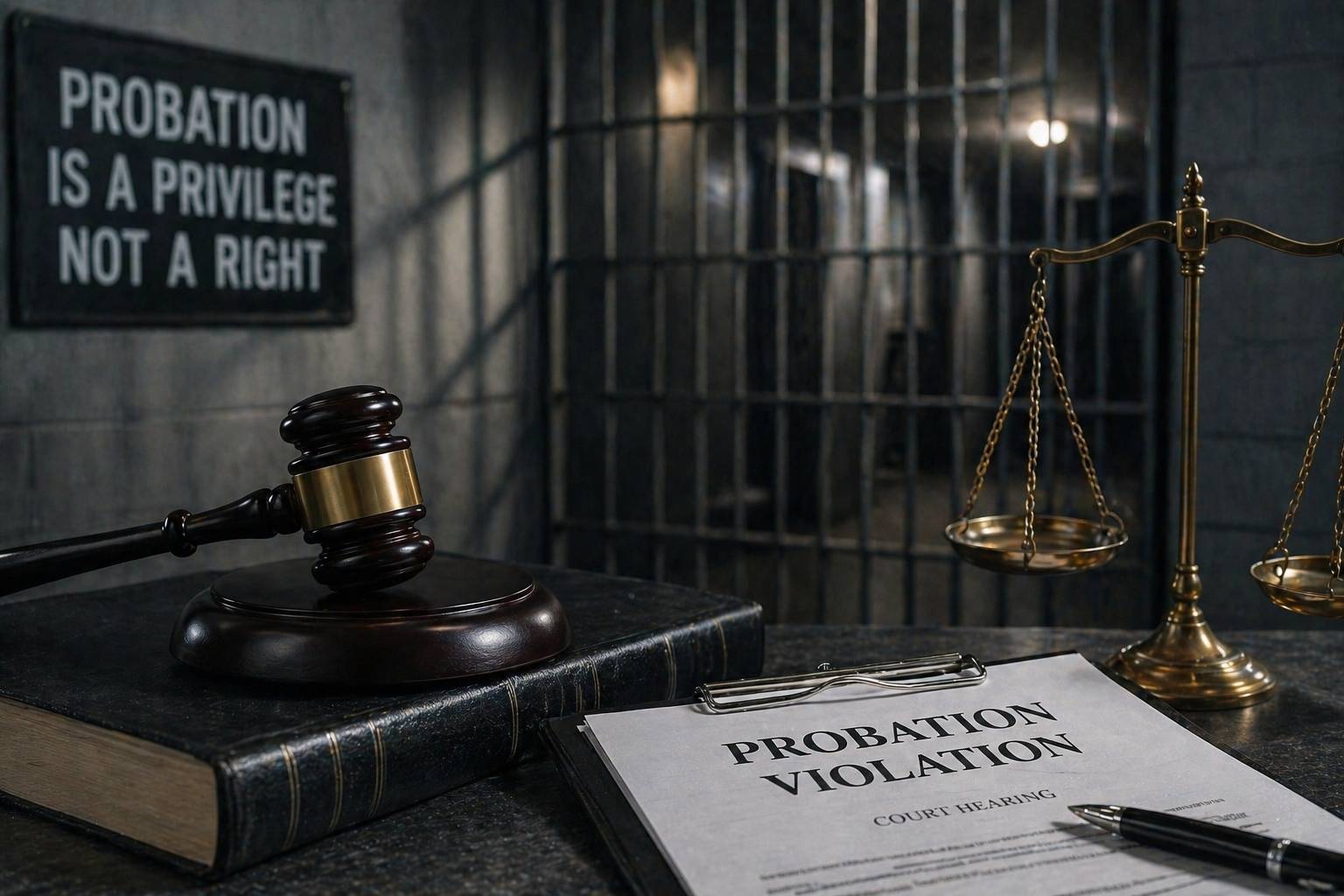
If you are accused of violating your probation in Georgia, you are facing one of the most serious situations in the criminal justice system. Unlike a new criminal charge, you have fewer constitutional protections in a probation revocation hearing. The burden of proof is lower, you are not entitled to a jury trial, and in many cases, the judge can revoke your probation and send you to prison to serve the remainder of your original sentence — sometimes years of prison time — based on conduct that would not even be a crime if you were not on probation.
At Bixon Law, Atlanta probation violation defense lawyer Michael Bixon understands the high stakes of probation revocation proceedings. With 15 years of criminal defense experience in Georgia courts, Michael has successfully defended clients accused of violating probation by presenting compelling mitigating evidence, challenging the sufficiency of the state’s proof, and negotiating alternatives to incarceration. He knows that probation violations are not automatic revocations — with the right defense strategy, you can avoid going to prison.
Michael Bixon is available 24 hours a day, 7 days a week to provide immediate assistance if you have been arrested on a probation violation warrant or if you believe you may be in violation of your probation terms. Do not wait — contact Bixon Law immediately to begin building your defense.
Probation is a court-ordered period of supervision that allows a defendant to serve their sentence in the community rather than in prison. Probation is a privilege, not a right, and it comes with strict conditions that you must follow.
When a judge sentences you to probation, you are released into the community under the supervision of a probation officer and you must comply with all conditions of probation. If you violate any condition, your probation can be revoked, and you can be sentenced to serve the remainder of your original sentence in prison.
Technical violations are the most common type of probation violation. They involve failing to comply with the administrative or procedural requirements of probation, even though no new criminal conduct has occurred.
Examples of technical violations:
Why technical violations are dangerous:
Even though technical violations may seem minor, they can still result in probation revocation and prison time. Judges have broad discretion in probation revocation cases, and some judges take technical violations very seriously, especially if you have a pattern of noncompliance.
Special condition violations involve failing to comply with conditions that were specifically tailored to your case, such as treatment requirements or employment mandates.
Examples of special condition violations:
A substantive violation occurs when you are arrested for or convicted of a new crime while on probation. This is the most serious type of probation violation because it demonstrates that you have not been rehabilitated and that you pose a continued risk to the community.
Important distinction: You do not need to be convicted of the new crime for it to constitute a probation violation. In many cases, simply being arrested for a new offense is sufficient for the probation officer to file a violation warrant.
Probation conditions vary depending on the offense, but common conditions include:
A probation violation occurs when you fail to comply with any condition of your probation. Violations are generally divided into three categories: