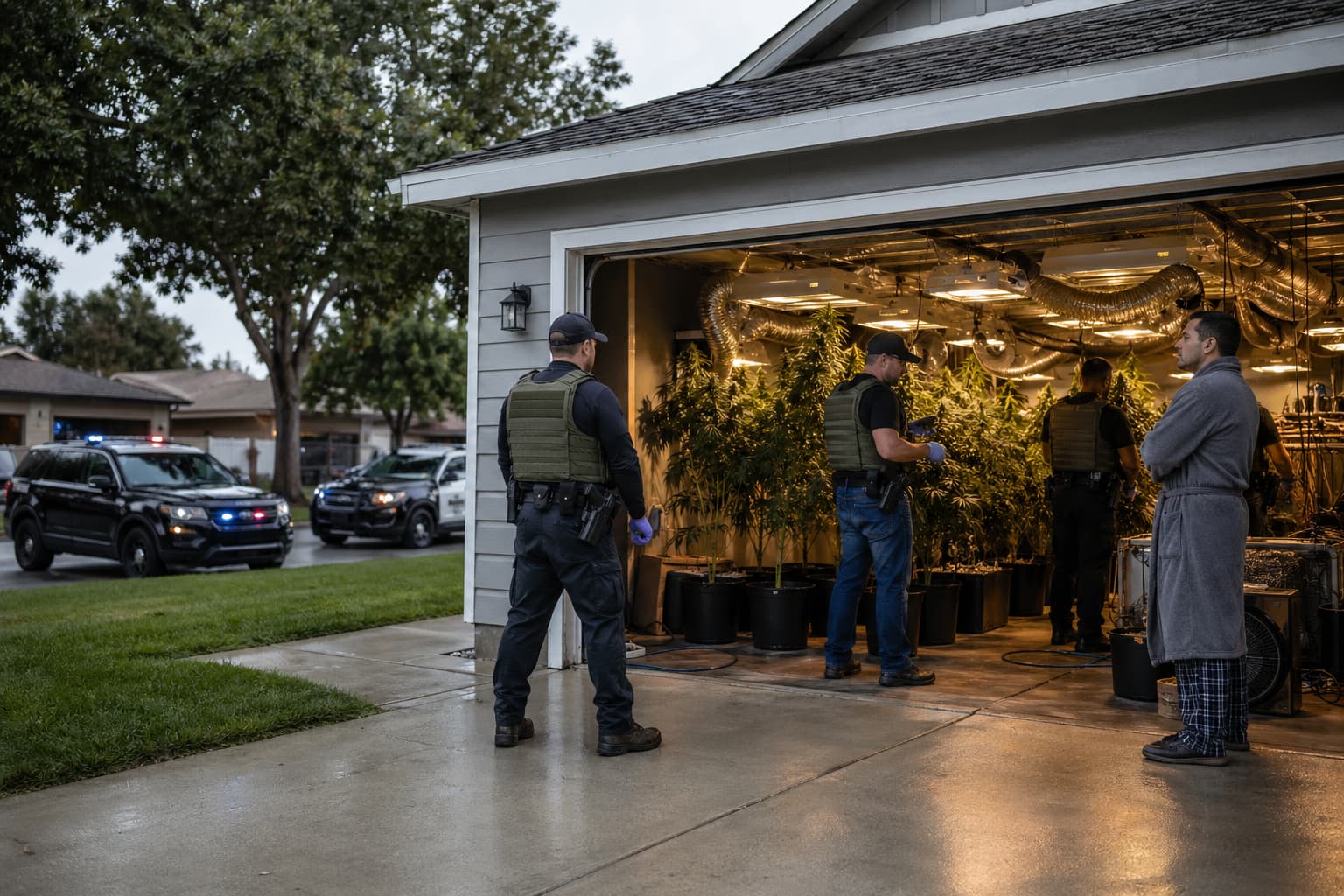
Growing marijuana in Georgia is a serious felony offense that can result in years of imprisonment, substantial fines, and a permanent criminal record. Whether you are cultivating a few plants for personal use or operating a large-scale grow operation, the legal consequences under Georgia law are severe and life-altering. :contentReference[oaicite:0]{index=0}
At Bixon Law, Atlanta criminal defense attorney Michael Bixon has defended individuals accused of marijuana cultivation for over 15 years. With extensive experience handling drug cases throughout Georgia’s state and superior courts, Michael Bixon understands the complexities of drug manufacturing charges and how prosecutors build their cases. If you have been arrested for growing marijuana in Georgia, understanding the charges you face and your legal options is critical to protecting your future.
Understanding Georgia’s Marijuana Cultivation Laws
What Constitutes Marijuana Cultivation Under Georgia Law?
Under O.C.G.A. § 16-13-30, it is illegal to manufacture, cultivate, or grow marijuana in Georgia. The statute makes no distinction between growing a single plant for personal use and operating a commercial grow operation; both are prosecuted as felonies.
Marijuana cultivation is defined as any activity involving the planting, growing, harvesting, or processing of marijuana plants. This includes:
- Planting marijuana seeds or seedlings
- Growing marijuana plants indoors or outdoors
- Maintaining a grow house or grow room
- Harvesting mature marijuana plants
- Drying, curing, or processing marijuana for distribution or personal use
Georgia law enforcement agencies take marijuana cultivation seriously. Police often discover grow operations through tips from informants, unusual electricity usage patterns, strong odors, or during the execution of search warrants for other offenses. Once discovered, law enforcement will typically seize all plants, growing equipment, and any processed marijuana found at the location.
How Georgia Classifies Marijuana Cultivation
Unlike simple possession of small amounts of marijuana, which can be charged as a misdemeanor if under one ounce, cultivation of any amount is prosecuted as a felony under Georgia’s Controlled Substances Act. The severity of the charge depends on the quantity of marijuana involved, measured by weight.
Georgia prosecutors determine weight by including the entire plant roots, stems, leaves, and all, not just the usable marijuana flower. This means that even immature plants or seedlings can result in substantial weight calculations that significantly increase the severity of charges and potential penalties.
Michael Bixon has successfully challenged weight calculations in marijuana cultivation cases by demonstrating that immature plants do not contain sufficient THC to be considered usable marijuana, or by questioning law enforcement’s weighing procedures. These defense strategies can sometimes result in reduced charges or case dismissals.
Criminal Penalties for Growing Marijuana in Georgia
Felony Cultivation Penalties Based on Weight
The penalties for marijuana cultivation in Georgia are directly tied to the weight of marijuana involved:
Cultivation of 10 Pounds or Less:
- Classification: Felony
- Prison sentence: 1 to 10 years
- Potential fines: Up to $5,000
- Eligibility: May qualify for probation or alternative sentencing programs
Cultivation of More Than 10 Pounds:
- Classification: Felony with enhanced penalties
- Prison sentence: 5 to 30 years
- Potential fines: Up to $100,000
- Mandatory minimum: May apply depending on circumstances
Cultivation Within 1,000 Feet of a School, Park, or Housing Project:
- Enhanced penalties apply under O.C.G.A. § 16-13-32.6
- Additional prison time: 5 years added to the base sentence
- No probation: Mandatory incarceration required
These penalties apply even for first-time offenders. Georgia courts have limited discretion in marijuana cultivation cases, particularly when substantial quantities are involved or when cultivation occurs near protected locations.
Additional Charges Often Filed Alongside Cultivation
Marijuana cultivation cases rarely involve a single charge. Prosecutors typically file multiple charges based on the evidence discovered during the investigation:
Possession with Intent to Distribute (O.C.G.A. § 16-13-30): If law enforcement finds packaging materials, scales, cash, or customer lists, prosecutors will add distribution charges. Intent to distribute carries the same 1 to 30-year sentencing range as cultivation, and these sentences can run consecutively.
Trafficking in Marijuana (O.C.G.A. § 16-13-31): If the total weight exceeds 10 pounds, prosecutors may charge trafficking instead of or in addition to cultivation. Marijuana trafficking in Georgia carries mandatory minimum sentences:
- 10-2,000 pounds: 5-year mandatory minimum, $100,000 fine
- 2,000-10,000 pounds: 7-year mandatory minimum, $250,000 fine
- Over 10,000 pounds: 15-year mandatory minimum, $1,000,000 fine
Possession of Drug-Related Objects (O.C.G.A. § 16-13-32.2): Growing equipment, lights, irrigation systems, and extraction tools can result in separate misdemeanor charges, each carrying up to one year in jail.
Firearm-Related Charges: If law enforcement discovers firearms at a grow location, prosecutors will add possession of a firearm during the commission of a felony under O.C.G.A. § 16-11-106. This charge alone carries a mandatory 5-year prison sentence that must run consecutively to any drug charges.
Michael Bixon has represented clients facing multiple marijuana-related charges and has successfully negotiated plea agreements that consolidate charges to avoid stacked sentences that could result in decades of imprisonment.
How Law Enforcement Discovers Marijuana Grow Operations
Common Investigation Methods
Georgia law enforcement agencies use various methods to detect marijuana cultivation:
Utility Usage Monitoring: Indoor grow operations require substantial electricity for high-intensity grow lights operating 12-24 hours per day. Utility companies sometimes flag unusual consumption patterns and report them to law enforcement. While high electricity usage alone is not probable cause for a search warrant, investigators use this information as a starting point for building a case.
Thermal Imaging: Although the U.S. Supreme Court ruled in Kyllo v. United States that using thermal imaging of a home without a warrant violates the Fourth Amendment, law enforcement can still observe heat signatures from public vantage points and use that information to support a search warrant application when combined with other evidence.
Confidential Informants: Many marijuana cultivation investigations begin with tips from confidential informants, often individuals facing their own criminal charges who provide information in exchange for leniency. Georgia courts allow confidential informant testimony, though defense attorneys can challenge the reliability and credibility of such sources.
Odor Detection: Mature marijuana plants produce a distinctive odor that can be detected from considerable distances, particularly during harvest. Law enforcement officers may use odor as justification for obtaining search warrants or, in some cases, as exigent circumstances permitting immediate warrantless searches.
Surveillance and Controlled Buys: For suspected distribution operations, investigators may conduct surveillance of the property, monitor visitors, or arrange controlled purchases through undercover officers or informants to establish probable cause for search warrants.
Search Warrants and Your Fourth Amendment Rights
Most marijuana cultivation prosecutions begin with the execution of a search warrant. Georgia law enforcement must demonstrate probable cause to a magistrate judge before obtaining a warrant. However, defense attorneys frequently identify violations of Fourth Amendment rights that can lead to suppression of evidence:
- Insufficient probable cause: If the warrant application relies solely on unreliable informant tips or speculative information
- Scope violations: If officers search areas or seize items not specified in the warrant
- Execution violations: If officers exceed the scope of the warrant or conduct the search in an unreasonably destructive manner
- Warrant staleness: If the information supporting the warrant is outdated and no longer establishes current probable cause
Michael Bixon has successfully suppressed evidence in marijuana cultivation cases by demonstrating that search warrants were improperly obtained or executed, resulting in dismissal of charges or a significant reduction in penalties.
Defenses to Marijuana Cultivation Charges in Georgia
Constitutional Defenses
Fourth Amendment Violations: If law enforcement conducted an illegal search or seizure, all evidence obtained as a result can be suppressed. This includes evidence found during the initial illegal search and any “fruit of the poisonous tree” evidence discovered as a result of the illegal search. Successfully suppressing evidence often results in case dismissal because prosecutors lack sufficient evidence to proceed.
Fifth Amendment Violations: If police questioned you about marijuana cultivation without properly advising you of your Miranda rights, any statements you made may be inadmissible. Many defendants unknowingly provide incriminating statements during arrest or booking that significantly strengthen the prosecution’s case. Suppressing these statements can weaken the government’s evidence substantially.
Factual Defenses
Lack of Knowledge or Control: In cases involving shared residences or properties, prosecutors must prove that you knew about the marijuana cultivation and exercised control over the grow operation. If you rented a room in a house where other tenants cultivated marijuana without your knowledge, you may have a viable defense.
Constructive Possession Challenges: For marijuana found in common areas or on large properties, the prosecution must prove constructive possession that you had knowledge of the marijuana and the ability to exercise control over it. In rural Georgia, where marijuana is sometimes grown on large tracts of land, demonstrating that you had no knowledge of cultivation on a remote portion of your property can be an effective defense.
Medical Necessity (Limited Application): While Georgia has authorized low-THC cannabis oil for certain medical conditions under the Haleigh’s Hope Act, growing marijuana plants for medical purposes remains illegal. However, evidence that cultivation was motivated by medical necessity for a serious condition may be presented as mitigating evidence during sentencing.
Entrapment: If law enforcement or their agents induced you to cultivate marijuana when you had no predisposition to commit the crime, entrapment may be a viable defense. This defense is particularly relevant in cases involving aggressive confidential informants who provided resources, assistance, or persistent encouragement.
Procedural Defenses
Chain of Custody Issues: Prosecutors must establish an unbroken chain of custody for all marijuana evidence from seizure through laboratory testing to trial. If evidence was mishandled, improperly stored, or inadequately documented, defense attorneys can challenge its admissibility and reliability.
Laboratory Testing Challenges: Georgia law requires chemical analysis to confirm that seized plants are actually marijuana containing THC. Defense attorneys can challenge laboratory procedures, the qualifications of analysts, and testing methodologies. In some cases, plants identified as marijuana by officers turn out to be hemp, which is legal to cultivate in Georgia under certain circumstances.
Insufficient Evidence of Cultivation: Mere presence of marijuana plants on property you own or control is not sufficient for conviction. Prosecutors must prove that you actively cultivated, grew, or manufactured the marijuana. In cases where plants are discovered on large properties or in abandoned structures, establishing active cultivation can be challenging for prosecutors.
Collateral Consequences Beyond Criminal Penalties
Long-Term Impact of a Marijuana Cultivation Conviction
A felony conviction for marijuana cultivation in Georgia creates consequences that extend far beyond prison time and fines:
Employment Restrictions: Felony drug manufacturing convictions create significant employment barriers. Many employers conduct background checks and have policies prohibiting hiring individuals with drug-related felony convictions. Licensed professions, including healthcare, education, law, and commercial driving, are often permanently closed to individuals with cultivation convictions.
Professional License Revocation: If you hold professional licenses, such as medical, legal, real estate, cosmetology, contractor, or others, a marijuana cultivation conviction may result in automatic license suspension or revocation. Georgia licensing boards take felony drug convictions seriously and often impose permanent bars on licensure.
Housing and Public Benefits: Federal housing authorities prohibit individuals with drug manufacturing convictions from residing in public housing. Additionally, federal student financial aid, food assistance, and other public benefits may be denied to individuals convicted of drug felonies.
Immigration Consequences: For non-U.S. citizens, marijuana cultivation convictions are considered aggravated felonies under federal immigration law. This classification makes individuals subject to mandatory detention and deportation with no possibility of relief in most cases. Even legal permanent residents with decades of U.S. residence face removal proceedings following drug manufacturing convictions.
Firearm Rights: Georgia and federal law permanently prohibit individuals convicted of felonies from possessing firearms. A marijuana cultivation conviction results in lifetime forfeiture of Second Amendment rights.
Voting Rights: While Georgia law restores voting rights upon completion of a sentence, individuals serving prison sentences or probation for felony marijuana cultivation cannot vote. The extended probation periods common in these cases can result in loss of voting rights for a decade or more.
Civil Asset Forfeiture
Georgia law enforcement agencies can seize property used in connection with marijuana cultivation through civil asset forfeiture proceedings under O.C.G.A. § 16-13-49. This includes:
- Real property where cultivation occurred (houses, land, grow facilities)
- Vehicles used to transport marijuana or cultivation equipment
- Money believed to be proceeds of marijuana sales
- Growing equipment, lights, irrigation systems, and other cultivation tools
Civil forfeiture proceedings are separate from criminal prosecutions. Property can be forfeited even if criminal charges are dismissed or result in an acquittal. Michael Bixon has represented clients in challenging civil forfeiture actions, demonstrating that property was not substantially connected to drug activity or that innocent owners had no knowledge of cultivation.
Pretrial Intervention and Alternative Sentencing Options
Georgia’s Conditional Discharge and First Offender Act
For individuals with no prior felony convictions, Georgia offers limited alternatives to traditional sentencing:
Conditional Discharge (O.C.G.A. § 16-13-2): This option is available only for possession charges, not cultivation or manufacturing. However, in some cases where cultivation charges involve minimal quantities, defense attorneys may negotiate reductions to possession charges that qualify for conditional discharge.
First Offender Act (O.C.G.A. § 42-8-60): First-time offenders who plead guilty or are convicted may request sentencing under the First Offender Act. If granted, the individual receives probation instead of a conviction on their record. Upon successful completion of probation, the charge is dismissed and sealed. However, First Offender is discretionary; judges frequently deny it for marijuana cultivation cases involving substantial quantities or aggravating factors.
Drug Court Programs: Some Georgia counties operate drug court programs offering intensive supervision, treatment, and testing as an alternative to incarceration. While typically reserved for possession and use cases, some manufacturing defendants with substance abuse issues may qualify depending on the circumstances and county policies.
Michael Bixon has successfully secured First Offender treatment for clients facing marijuana cultivation charges by demonstrating that cultivation was for personal use, presenting evidence of employment and community ties, and advocating for rehabilitation over incarceration.
Medical Marijuana Laws in Georgia: A Limited Exception
Georgia’s Low-THC Oil Registry
Georgia’s Haleigh’s Hope Act and subsequent amendments created a legal medical cannabis program, but it has an extremely limited application:
What IS Legal:
- Possession of low-THC cannabis oil (no more than 5% THC) by registered patients
- Conditions qualifying for registration include cancer, seizure disorders, Crohn’s disease, and other serious medical conditions
- Licensed production facilities may cultivate marijuana for low-THC oil production
What Remains ILLEGAL:
- Growing marijuana plants, even for registered medical cannabis patients
- Possessing marijuana in plant or flower form
- Producing cannabis oil at home
- Possessing cannabis oil with more than 5% THC
Many individuals charged with marijuana cultivation mistakenly believe that medical necessity provides a legal defense. Under current Georgia law, no medical necessity exception exists for cultivating marijuana plants. Patients registered for low-THC oil must obtain it from licensed dispensaries; home cultivation remains a felony.
What to Do If You Are Arrested for Growing Marijuana
Immediate Steps to Protect Your Rights
If law enforcement executes a search warrant or arrests you for marijuana cultivation, taking immediate action is critical:
Exercise Your Right to Remain Silent: Do not answer questions about marijuana cultivation, ownership of the property, or who has access to growing areas. Politely state, “I am exercising my right to remain silent and want to speak with my attorney.” Law enforcement will attempt to obtain incriminating statements; anything you say will be used against you.
Do Not Consent to Searches: If officers do not have a warrant, clearly state, “I do not consent to any searches.” While this will not prevent searches for which officers have legal authority, it preserves your ability to challenge unlawful searches in court. Never physically resist law enforcement, but verbally withhold consent.
Document Everything: As soon as possible, write down everything you remember about the arrest and search:
- Time and date of the search
- Names and badge numbers of officers present
- What officers said and did
- What areas do they search
- What items do they seize
- Whether they presented a warrant and what it authorized
Contact a Criminal Defense Attorney Immediately: Marijuana cultivation cases are complex and move quickly. Evidence must be preserved, witnesses interviewed, and constitutional violations identified early. Waiting weeks to consult an attorney can result in lost opportunities to challenge evidence or negotiate favorable outcomes.
Why Early Legal Representation Matters
The first 72 hours after arrest are critical in marijuana cultivation cases:
Bond Hearings: Cultivation cases involving substantial quantities often result in high bonds or bond denials. An experienced attorney can present evidence of community ties, employment, and lack of flight risk to secure reasonable bond conditions.
Preservation of Evidence: Defense investigators must document the search location, photograph growing areas, and identify potential witnesses before evidence is altered or memories fade. Once a grow operation is dismantled, recreating the scene for defense purposes becomes impossible.
Suppression Motions: Constitutional challenges to searches, seizures, and interrogations must be filed promptly. Evidence that search warrants were improperly obtained or executed can result in suppression of evidence and case dismissal, but these issues must be raised before trial.
Plea Negotiations: Early involvement of a defense attorney allows for negotiations with prosecutors before formal charges are filed. In some cases, attorneys can persuade prosecutors to reduce charges or decline prosecution based on weaknesses in the evidence.
Why Federal Prosecution May Be a Concern
When Marijuana Cultivation Becomes a Federal Case
While most marijuana cultivation prosecutions occur in Georgia state courts, certain circumstances trigger federal jurisdiction:
Large-Scale Operations: Indoor grow operations with hundreds or thousands of plants, or outdoor operations on federal land, often attract federal prosecution. Federal charges carry significantly harsher mandatory minimum sentences than Georgia state charges.
Interstate Distribution: If evidence suggests marijuana cultivated in Georgia was distributed across state lines, federal prosecutors may charge violations of the Controlled Substances Act with mandatory minimum sentences of 5 to 10 years, depending on quantity.
Organized Criminal Activity: Cultivation operations involving multiple participants, sophisticated financial structures, or connections to drug trafficking organizations may be prosecuted federally under conspiracy and continuing criminal enterprise statutes.
Firearms Enhancement: Federal prosecutors aggressively pursue cultivation cases where firearms are present. Under federal law, possessing a firearm during a drug trafficking crime carries a mandatory consecutive 5-year sentence for the first firearm and 25 years for subsequent firearms.
Michael Bixon’s experience defending federal drug cases provides clients with knowledgeable representation regardless of whether charges are filed in state or federal court.
Recent Changes and Trends in Georgia Marijuana Enforcement
Changing Attitudes Toward Marijuana in Georgia
While marijuana remains illegal in Georgia, enforcement patterns have shifted in recent years:
Declining Prosecution of Small-Quantity Possession: Many Georgia jurisdictions have reduced enforcement of possession of less than one ounce, with some prosecutors declining to prosecute first-time possession cases. However, this leniency does NOT extend to cultivation; manufacturing charges are prosecuted aggressively regardless of quantity.
Increased Focus on Large-Scale Operations: Georgia law enforcement has shifted resources toward dismantling large-scale grow operations, particularly indoor facilities with hundreds of plants. Multi-agency task forces targeting marijuana manufacturing have resulted in high-profile prosecutions with substantial prison sentences.
Hemp Farming Complications: Georgia’s Hemp Farming Act of 2019 legalized the cultivation of hemp (cannabis with less than 0.3% THC). However, hemp and marijuana plants are visually identical, creating complications for law enforcement and defendants. Testing is required to distinguish legal hemp from illegal marijuana, and some cultivation prosecutions have been dismissed when seized plants tested below the legal THC threshold.
Impact of Legalization in Other States
Georgia remains one of the states with the strictest marijuana laws despite nationwide trends toward legalization. Defendants sometimes mistakenly believe that because marijuana is legal in nearby states, Georgia’s enforcement has relaxed. This is false. Georgia prosecutors continue to pursue cultivation charges vigorously, and judges impose substantial prison sentences.
How Bixon Law Can Help
Experience Defending Marijuana Cultivation Cases
With over 15 years of criminal defense experience in Georgia, attorney Michael Bixon has successfully defended clients accused of marijuana cultivation throughout metro Atlanta and the state. His experience includes:
- Challenging search warrants based on insufficient probable cause or Fourth Amendment violations
- Suppressing evidence obtained through illegal searches and seizures
- Negotiating plea agreements that avoid mandatory minimum sentences and preserve future opportunities
- Securing First Offender treatment for clients with no prior felony convictions
- Defending clients at trial when the evidence supports an acquittal or reduced charges
Michael Bixon’s reputation in Georgia courtrooms, relationships with prosecutors, and understanding of drug case investigation methods provide clients with effective representation during the most challenging circumstances.
Personalized Defense Strategies
Every marijuana cultivation case presents unique circumstances requiring individualized defense strategies:
- Cultivation for personal use versus commercial distribution
- Indoor versus outdoor growing operations
- Single defendant versus multiple co-defendants
- First-time offender versus prior criminal history
- Presence or absence of aggravating factors (firearms, children, location near schools)
Bixon Law analyzes every aspect of your case to identify weaknesses in the prosecution’s evidence, constitutional violations, and opportunities for favorable resolution. From the initial consultation through trial or appeal, you will have direct access to attorney Michael Bixon and a clear understanding of your options and the likely outcomes.
Frequently Asked Questions
- Can I be charged with cultivation for a single marijuana plant? Yes. Georgia law makes no minimum quantity exception for marijuana cultivation. Growing even a single plant is a felony punishable by 1 to 10 years in prison.
- What if the marijuana was for my personal medical use? Georgia law does not recognize medical necessity as a defense to marijuana cultivation. While you may possess low-THC cannabis oil if you are a registered patient, growing marijuana plants remains illegal regardless of medical conditions.
- Can police search my home based only on an odor of marijuana? Odor alone may not be sufficient for a warrantless search of your home, but it can support a search warrant application when combined with other evidence. If officers claim to smell marijuana, do not consent to a search and immediately contact an attorney.
- Will I go to prison for a first-time cultivation charge? It depends on the quantity involved, the location of cultivation, and whether aggravating factors are present. First-time offenders cultivating small quantities for personal use may qualify for probation or First Offender treatment, while large-scale operations typically result in prison sentences even for first-time offenders.
- Can I get my cultivation charge reduced to possession? In some cases involving minimal quantities, defense attorneys can negotiate reductions from cultivation to possession. Possession charges carry lower penalties and may qualify for conditional discharge. However, prosecutors are often reluctant to reduce cultivation charges because manufacturing is viewed more seriously than simple possession.
Take Action to Protect Your Future
If you have been arrested for or are under investigation for marijuana cultivation in Georgia, the decisions you make in the coming days will significantly impact the rest of your life. Do not face these serious felony charges without experienced legal representation.
Contact Bixon Law today for a confidential consultation. Attorney Michael Bixon will review the specific circumstances of your case, explain your legal options, and begin building a defense strategy designed to protect your freedom and your future.
Time is critical in marijuana cultivation cases. Evidence must be preserved, witnesses must be interviewed, and constitutional challenges must be identified early. Do not wait, call Bixon Law now to schedule your consultation and take the first step toward protecting your rights.