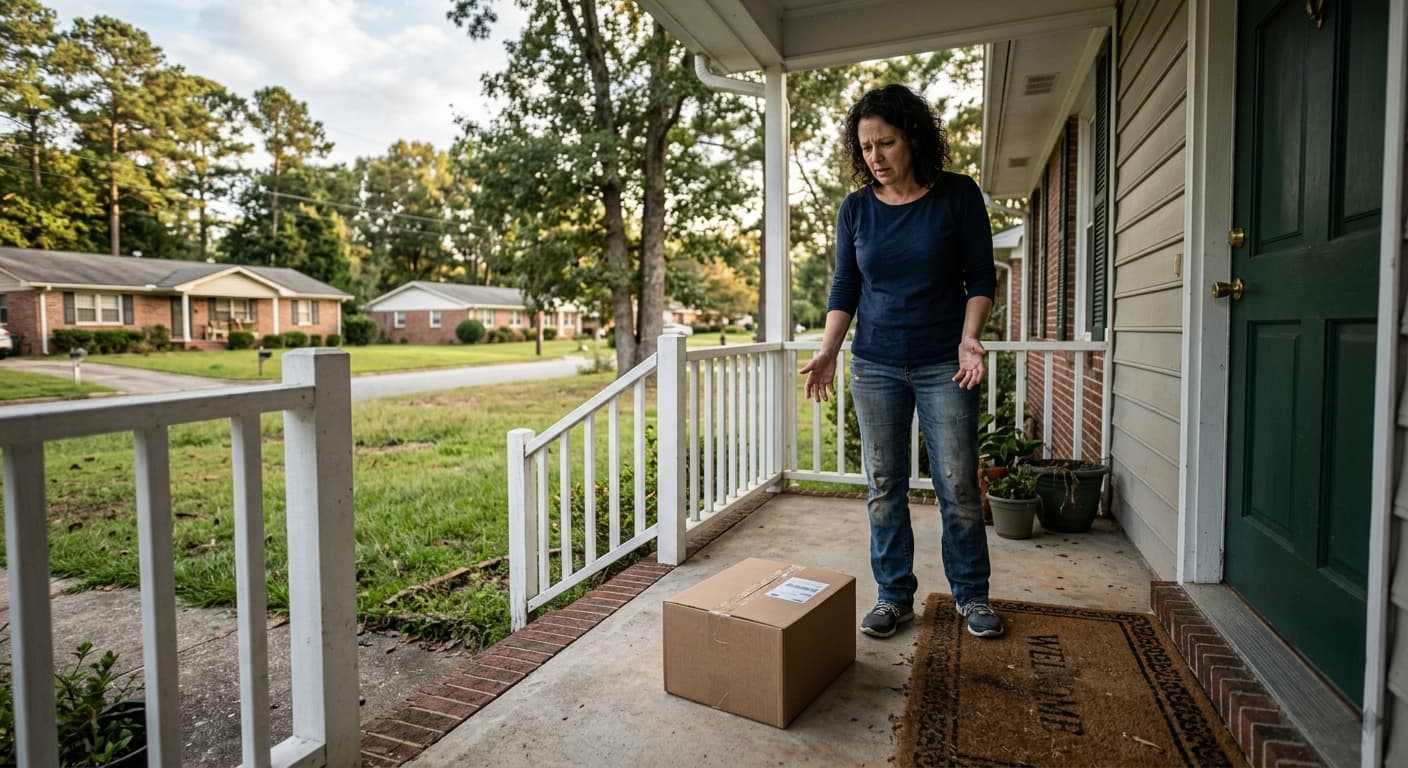
Finding an unexpected package on your doorstep might seem like a harmless mix-up or a surprise gift. But when that package contains controlled substances or other contraband, your confusion can quickly turn into a nightmare involving law enforcement, federal agents, and serious criminal charges. In Georgia, being linked to a package containing drugs or illegal items can result in trafficking charges, federal prosecution, and years in prison, even if you never ordered anything.
If you discover contraband in an unsolicited package or law enforcement contacts you about a suspicious delivery, you need to understand your legal position immediately. As an experienced Georgia criminal defense attorney who has defended numerous clients in mail-related drug cases, I’ve seen how quickly these situations escalate and how devastating the consequences can be without proper legal representation.
This article explains what happens when contraband arrives at your address, how law enforcement uses controlled deliveries to build cases, why accepting a package does not automatically prove guilt, and the strategic steps you must take to protect yourself if police arrive at your door.
The Shock of the Unsolicited Package: How Innocent People Get Targeted
You’re not expecting a delivery. You didn’t order anything online. Yet a package arrives at your home with your name and address on it. You open it and discover drugs, counterfeit goods, or other illegal items. Your first reaction might be shock, confusion, or even fear. Your second reaction should be extreme caution.
Why Strangers Use Real Addresses for Drug Shipments
Drug trafficking organizations frequently use real residential addresses belonging to innocent people to ship contraband through the mail. This practice serves multiple purposes. First, it provides a layer of separation between the traffickers and the drugs. If law enforcement intercepts the package, the actual criminals aren’t connected to the address. Second, using a legitimate residential address makes the package appear less suspicious than shipping to vacant properties or commercial mail drops. Third, traffickers can monitor the delivery and retrieve the package before the resident even knows it arrived.
In some schemes, criminals send packages to random addresses with plans to intercept them immediately after delivery. They might have someone watching the house or tracking the package online. The moment it’s delivered, they approach the door claiming to be a neighbor or friend who accidentally used the wrong address. By the time you realize what happened, they’re gone with the drugs.
Other times, identity theft plays a role. Criminals steal personal information and use it to create accounts on dark web marketplaces or with shipping companies. Packages get sent to victims who have no knowledge that their identities have been compromised until contraband shows up at their door.
The Brushing Scam Connection and Criminal Exploitation
While many unsolicited packages involve harmless “brushing scams” where sellers send cheap items to generate fake reviews, criminals have exploited this phenomenon. They know that people have become accustomed to receiving random packages they didn’t order. This conditioning makes some people less suspicious when a package arrives unexpectedly. They might set it aside, open it out of curiosity, or even accept it from a delivery person without question.
Law enforcement recognizes that these schemes exist, but they also know that some people claim ignorance as a defense when they’re actually involved in drug trafficking. This creates a challenging situation for truly innocent individuals who must prove they had no knowledge of or connection to the contraband.
When Your Address Becomes a Target
Your address might be targeted for several reasons beyond random selection. Former residents who engaged in drug trafficking might have used your address before you moved in. Neighbors involved in illegal activity might use your address to avoid scrutiny at their own homes. In some cases, disgruntled former acquaintances or domestic partners might send contraband to your address to cause you legal problems.
The reality is that anyone can become a victim of this scheme. Georgia law enforcement has seen cases involving elderly homeowners, young professionals, families with children, and people from all walks of life who suddenly find themselves connected to drug trafficking simply because someone used their address.
Understanding “Controlled Deliveries” and Law Enforcement Interceptions
When law enforcement intercepts a package containing contraband, they don’t always seize it immediately. Instead, they often conduct what’s known as a “controlled delivery,” a strategic technique designed to identify and arrest the actual recipient or intended possessor of the illegal items.
How Postal Inspectors and Drug Agents Identify Suspicious Packages
The U.S. Postal Inspection Service, DEA agents, and other law enforcement agencies use various methods to identify packages that might contain contraband. These include drug-sniffing dogs at mail sorting facilities, X-ray technology, behavioral profiling of shipping patterns, and tips from confidential informants.
Packages that raise red flags often share certain characteristics: excessive postage, handwritten labels, incorrect return addresses, strong odors, unusual weight compared to stated contents, or shipping patterns that match known drug routes. When inspectors identify a suspicious package, they can obtain a federal search warrant to open and examine the contents.
If they discover drugs or other contraband, law enforcement faces a choice. They can seize the package and send a notification letter to the intended recipient, or they can conduct a controlled delivery to catch the person who knowingly ordered the contraband.
The Controlled Delivery Process in Georgia
In a controlled delivery, law enforcement reseals the package to make it appear untouched and arranges for an undercover officer or cooperating postal worker to deliver it to the address on the label. Officers maintain surveillance of the location, watching to see who accepts the package and what happens next.
The key moment law enforcement looks for is not just acceptance of the package, but evidence of knowledge and intent. They want to see the recipient open the package, examine the contents, or attempt to conceal or move the contraband. Simply accepting a package and setting it inside your home typically isn’t enough to prove criminal intent, though some overzealous prosecutors might try to charge you anyway.
After delivery, officers might wait hours or even days before making contact. They want to see if you’ll open the package, if you’ll contact someone about it, or if someone else will arrive to collect it. This surveillance period gives them additional evidence about whether you knowingly expected the contraband.
Federal vs. State Jurisdiction in Mail-Related Drug Cases
Controlled deliveries involving the mail typically fall under federal jurisdiction because they involve the U.S. Postal Service and federal drug trafficking laws. However, Georgia law enforcement agencies often work in coordination with federal authorities through task forces. Depending on the amount and type of drugs involved, you might face either federal charges, state charges, or both.
Federal drug trafficking charges carry severe mandatory minimum sentences. Even a first offense involving certain quantities of cocaine, methamphetamine, or fentanyl can result in five-, ten-, or twenty-year mandatory minimum prison sentences. Georgia state charges under the Georgia Controlled Substances Act can also result in lengthy prison sentences, especially for trafficking quantities.
The decision about whether to prosecute federally or at the state level often depends on the quantity of drugs, your criminal history, and prosecutorial priorities in your jurisdiction. As your defense attorney, I work to understand which system offers better options for your defense and potential outcomes.
Why Simply Accepting a Delivery Does Not Equal Knowledge or Intent
One of the most critical legal principles in mail-related drug cases is that mere possession of a package does not prove you knowingly ordered or intended to possess contraband. Prosecutors must prove beyond a reasonable doubt that you had knowledge of the package’s contents and that you intended to possess the illegal items.
The Legal Element of Knowledge
Under both federal and Georgia law, drug possession charges require proof of knowledge. You cannot be guilty of possessing drugs if you genuinely didn’t know they were there. This seems straightforward, but prosecutors and law enforcement often try to infer knowledge from circumstantial evidence.
For example, they might argue that because the package had your name and address on it, you must have ordered it. Or they might claim that your decision to bring the package inside your home shows you intended to possess whatever was inside. These arguments ignore the reality that people receive misdelivered packages, unsolicited items, and packages sent by others on a regular basis.
Constructive Possession vs. Actual Possession
Georgia law recognizes two types of possession: actual possession, where you have physical control over the contraband, and constructive possession, where you have the ability and intent to control the contraband even if it’s not physically on you.
When contraband arrives in a package at your home, prosecutors might try to charge you with constructive possession, arguing that because it was delivered to your address, you had the ability to control it. However, constructive possession requires both the ability to control the item and knowledge of its presence and character.
Simply living at an address where contraband is delivered does not establish constructive possession. Multiple people might have access to your mailbox or front porch. Delivery services sometimes leave packages at the wrong addresses. Without additional evidence linking you specifically to the contraband, constructive possession charges should fail.
Common Misconceptions Law Enforcement Exploits
Law enforcement officers investigating controlled deliveries often make statements designed to get you to incriminate yourself. They might say, “We know you ordered this package,” or “Just tell us who it’s for, and this will go easier for you.” These statements are interrogation tactics, not statements of fact.
Officers might also imply that accepting delivery of a package proves your guilt. They’ll say things like “You brought it into your house, so you possessed it” or “The package has your name on it, so you’re responsible for what’s inside.” These assertions ignore the legal requirement of proving knowledge and intent.
Another common tactic involves trying to get you to make statements about “other packages” you might have received. Officers ask questions like “How many times has this happened before?” or “Who else knows about these deliveries?” These questions are designed to make you think they already have evidence against you when they might have very little.
Understanding these tactics is crucial because anything you say to law enforcement can and will be used against you, even if your statements are taken out of context or misinterpreted. This is why invoking your right to remain silent and requesting an attorney immediately is so important.
Strategic Steps to Take If the Police Knock on Your Door with a Package
The moment law enforcement contacts you about a package is the most critical point in protecting your legal rights. How you respond in the next minutes and hours can determine whether you face criminal charges and what evidence the prosecution can use against you.
Do Not Make Any Statements Without an Attorney Present
Your first and most important step is to exercise your Fifth Amendment right to remain silent. Police are legally allowed to lie to you during questioning. They can tell you that talking will help you, that they “just want to hear your side,” or that refusing to talk makes you look guilty. None of these statements is true.
The U.S. Supreme Court has repeatedly held that you cannot be penalized for exercising your constitutional rights. Prosecutors cannot argue that your silence is evidence of guilt. What they can use against you is every single word you say to the police, taken in whatever context benefits their case.
When officers knock on your door, you should clearly state: “I am invoking my right to remain silent and my right to an attorney. I will not answer any questions without my lawyer present.” Then, actually remain silent. Do not try to explain yourself, tell your side of the story, or convince them you’re innocent. Simply invoke your rights and maintain silence.
Do Not Consent to Any Searches
Law enforcement might ask for permission to search your home, vehicle, phone, or computer. They ask for consent because getting a warrant takes time and requires probable cause. If they already had enough evidence for a warrant, they wouldn’t need to ask your permission.
When officers request consent to search, firmly but politely decline: “I do not consent to any searches.” You don’t need to provide a reason or explanation. You don’t need to justify exercising your Fourth Amendment rights. Simply decline and maintain that position, no matter what tactics they use.
Officers might say things like “If you have nothing to hide, why won’t you let us look?” or “Refusing to consent makes you look guilty.” These are manipulation tactics. Innocent people have every right to require law enforcement to obtain a warrant based on probable cause before searching their private property.
If officers claim they have a warrant, ask to see it and read it carefully. Warrants have specific limitations on what can be searched and where. Don’t interfere with a valid search, but don’t assist either. You have the right to observe the search and should do so if possible, noting what they take and whether they exceed the scope of the warrant.
Document Everything You Can Remember
As soon as law enforcement leaves or you’re able to do so safely, write down every detail you can remember about the situation. Note the date and time officers arrived, how many officers were present, what agency they represented, what they said to you, what questions they asked, whether they searched anything, and what they took.
If you received an unsolicited package before police contact, document when it arrived, how it was delivered, whether you opened it, what you did with it, and any unusual circumstances surrounding it. If possible, take photos of the package, tracking information, and anything else relevant before police arrive.
This documentation serves several purposes. First, memories fade quickly, and having detailed notes helps you and your attorney understand exactly what happened. Second, it allows your lawyer to identify potential legal issues, such as whether officers exceeded their authority or violated your rights. Third, it creates a contemporaneous record that carries more weight than trying to recall details weeks or months later during trial preparation.
Contact an Experienced Georgia Criminal Defense Attorney Immediately
The sooner you involve an attorney, the better your chances of avoiding charges or building a strong defense. An experienced Georgia drug crimes lawyer understands how controlled delivery cases work, knows the defenses available to you, and can immediately begin protecting your interests.
If you’re contacted by law enforcement about a package, you should reach out to an attorney before answering any questions. If you’ve already been arrested, your first call should be to a lawyer who handles serious drug cases in Georgia. Look for an attorney with specific experience in federal drug trafficking cases and mail-related charges, as these cases involve complex legal issues that many general practice lawyers don’t regularly handle.
Time is critical in these cases. Evidence needs to be preserved, witnesses need to be interviewed while memories are fresh, and early investigation can sometimes prevent charges from being filed at all. The prosecution is already building its case against you from the moment that package was intercepted. You need someone building your defense just as aggressively.
Key Defenses: Proving Lack of Knowledge and Mail System Vulnerabilities
Successfully defending against charges related to an unsolicited package containing contraband requires a strategic approach that undermines the prosecution’s ability to prove knowledge and intent while highlighting the vulnerabilities in the mail system that allow innocent people to be targeted.
Demonstrating No Knowledge of Package Contents
The most fundamental defense is proving you had no knowledge that contraband was in the package. This defense can be supported by various factors. If you never ordered anything to be delivered, have no connection to the sender, didn’t open the package before the police arrived, or immediately reported the suspicious package to the authorities, these facts support your lack of knowledge.
Your attorney can investigate whether you have a history of ordering items online from the sender, whether any money can be traced from your accounts to purchasing contraband, or whether any electronic communications show you expected a delivery. The absence of this evidence strengthens your defense.
Additionally, if the package arrived without proper postage, came from a location you’ve never visited, or was addressed in a way that differs from how you normally receive mail, these details suggest you weren’t the intended recipient. Expert testimony about shipping patterns and drug trafficking methods can further support that you were an unwitting victim rather than a participant.
Challenging the Prosecution’s Evidence
In controlled delivery cases, prosecutors often rely heavily on circumstantial evidence and inferences. Your defense attorney should challenge every piece of evidence the government presents. This includes questioning whether law enforcement had probable cause to search the package initially, whether the warrant was valid and properly executed, and whether the chain of custody for the evidence was maintained.
Suppression motions can be filed to exclude evidence obtained through illegal searches or violations of your constitutional rights. If police questioned you without properly advising you of your Miranda rights, those statements might be suppressed. If they searched your home without a valid warrant or exceeded the scope of a warrant, the fruits of that search could be excluded from evidence.
Cross-examination of law enforcement witnesses is critical. Officers conducting controlled deliveries follow certain procedures, and deviations from those procedures can create reasonable doubt. Your attorney should question whether surveillance was continuous, whether the package could have been tampered with, and whether officers can definitively prove you were the person who accepted or opened the package.
Alternative Explanations and Third-Party Involvement
A strong defense often includes presenting alternative explanations for how contraband ended up at your address. Evidence that former residents engaged in criminal activity, proof that your identity was stolen, or testimony from neighbors about suspicious activity around your property can all support your innocence.
If someone else had access to your mail or home, this creates reasonable doubt about who the contraband belonged to. Roommates, family members, guests, or service workers who accessed your property could have been the intended recipients. Your attorney should investigate all possible alternative suspects and present this evidence to the jury.
In some cases, proof that your address is publicly listed online, that packages are frequently misdelivered in your area, or that mail theft is common in your neighborhood can support the defense that you were randomly targeted by criminals using your address without your knowledge or consent.
Mail System Vulnerabilities and Reasonable Doubt
The modern mail system has numerous vulnerabilities that your defense attorney should highlight. Packages are sometimes delivered to the wrong addresses due to similar street names or numbers. Delivery drivers might leave packages at the wrong door in apartment complexes or multi-unit buildings. Automated sorting systems can misdirect packages.
Additionally, virtually anyone can send a package to any address in the country. No verification is required that the recipient actually ordered or expects the package. This systemic vulnerability means that receiving a package at your address proves nothing about your knowledge or intent.
Expert witnesses on mail systems, drug trafficking methods, and identity theft can testify about how commonly criminals exploit these vulnerabilities. This testimony helps the jury understand that innocent people really do receive contraband they never ordered and creates reasonable doubt about the prosecution’s theory that you must have been involved.
How a Georgia Defense Lawyer Protects People Facing Mail-Related Accusations
When you’re facing accusations related to contraband in the mail, you need more than just any attorney; you need an experienced Georgia criminal defense lawyer who understands the specific legal and practical challenges these cases present.
Immediate Investigation and Evidence Preservation
From the moment you retain an attorney, the investigation into your case should begin. This includes obtaining all available evidence about the package, including tracking information, surveillance footage from your property or nearby businesses, and any documents related to the controlled delivery operation.
Your lawyer should also secure exculpatory evidence that might disappear over time. This includes interviewing neighbors who might have seen the package delivered or noticed suspicious activity, obtaining your phone and computer records to show you weren’t communicating about drug shipments, and gathering financial records proving you didn’t pay for contraband.
Time-sensitive evidence like security camera footage often gets deleted after 30 to 90 days. Cell phone location data might only be available for limited periods. Witnesses’ memories fade. An attorney who acts quickly can preserve evidence that might be crucial to your defense but would be lost if you wait.
Negotiating with Prosecutors Before Charges Are Filed
In some controlled delivery cases, prosecutors haven’t yet decided whether to file charges when they make initial contact with suspects. This presents a critical window of opportunity for your attorney to present evidence of your innocence before you’re formally charged.
An experienced defense lawyer can communicate with prosecutors, provide documentation showing you had no knowledge of or connection to the contraband, and explain the weaknesses in the government’s case. Sometimes this proactive approach results in prosecutors declining to file charges, especially if the evidence clearly shows you were an innocent victim rather than a participant.
Even if charges are eventually filed, early communication with prosecutors can sometimes result in reduced charges or favorable plea agreements. The key is having an attorney who knows how to navigate these discussions strategically without inadvertently providing information that strengthens the prosecution’s case.
Specialized Knowledge of Federal and Georgia Drug Laws
Mail-related drug cases often involve both federal and state law, and the interplay between these two systems creates complex legal issues. Federal sentencing guidelines, mandatory minimums, and quantity calculations differ significantly from Georgia’s approach to drug crimes.
An attorney experienced in both federal and state drug prosecutions understands how to analyze which system offers better options for your defense. Sometimes accepting federal charges provides more favorable plea opportunities. Other times, state charges allow for pretrial diversion programs or alternative sentencing options not available federally.
This specialized knowledge extends to understanding how different controlled substances are classified and sentenced. The difference between simple possession, possession with intent to distribute, and trafficking can mean the difference between probation and decades in prison. Your attorney must know how prosecutors make these charging decisions and how to challenge classifications that aren’t supported by evidence.
Trial Experience and Courtroom Strategy
If your case goes to trial, you need an attorney with substantial courtroom experience in drug cases. These trials often involve complex scientific evidence about drug testing, detailed testimony about law enforcement procedures, and sophisticated legal arguments about knowledge and intent.
Throughout my career defending clients in Georgia drug cases, I’ve seen how critical effective cross-examination and presentation of defense evidence is to achieving favorable outcomes. Juries in controlled delivery cases need to understand how the mail system works, how criminals target innocent people, and why the government’s evidence doesn’t prove guilt beyond a reasonable doubt.
Trial preparation in these cases requires working with expert witnesses, developing compelling demonstrative exhibits, and crafting a narrative that resonates with jurors. It means anticipating the prosecution’s arguments and having persuasive responses ready. It requires the confidence and skill that only come from extensive trial experience.
Protecting Your Future Beyond the Criminal Case
Even if you avoid conviction, being accused of a drug crime can have lasting consequences. Your attorney should work to protect not just your freedom but your reputation, employment, and future opportunities.
This might include seeking record restriction or expungement if charges are dismissed, addressing any civil forfeiture actions if property was seized, and helping you understand how to respond to questions about the arrest on job applications or professional licensing forms.
For clients who accept plea agreements, your lawyer should negotiate for outcomes that minimize long-term consequences. This includes seeking first-offender treatment in Georgia, which allows for discharge without conviction after successful completion of probation, or federal pretrial diversion programs that can result in dismissal of charges.
Why Experience with Drug Cases Matters
Drug trafficking and possession cases involve specialized knowledge that general practice attorneys often lack. Understanding how prosecutors build these cases, what defenses are most effective, and how to negotiate favorable outcomes requires specific experience with drug crimes.
As a criminal defense attorney who has represented clients in numerous drug cases throughout Georgia, I understand the fear and uncertainty you face when accused of a crime you didn’t commit. I’ve seen how devastating these charges can be and how crucial aggressive, knowledgeable representation is to protecting your rights and your future.
If you’ve received an unsolicited package containing contraband or if law enforcement has contacted you about a suspicious delivery, don’t try to handle the situation alone. Contact an experienced Georgia criminal defense lawyer immediately to discuss your case and begin building your defense.