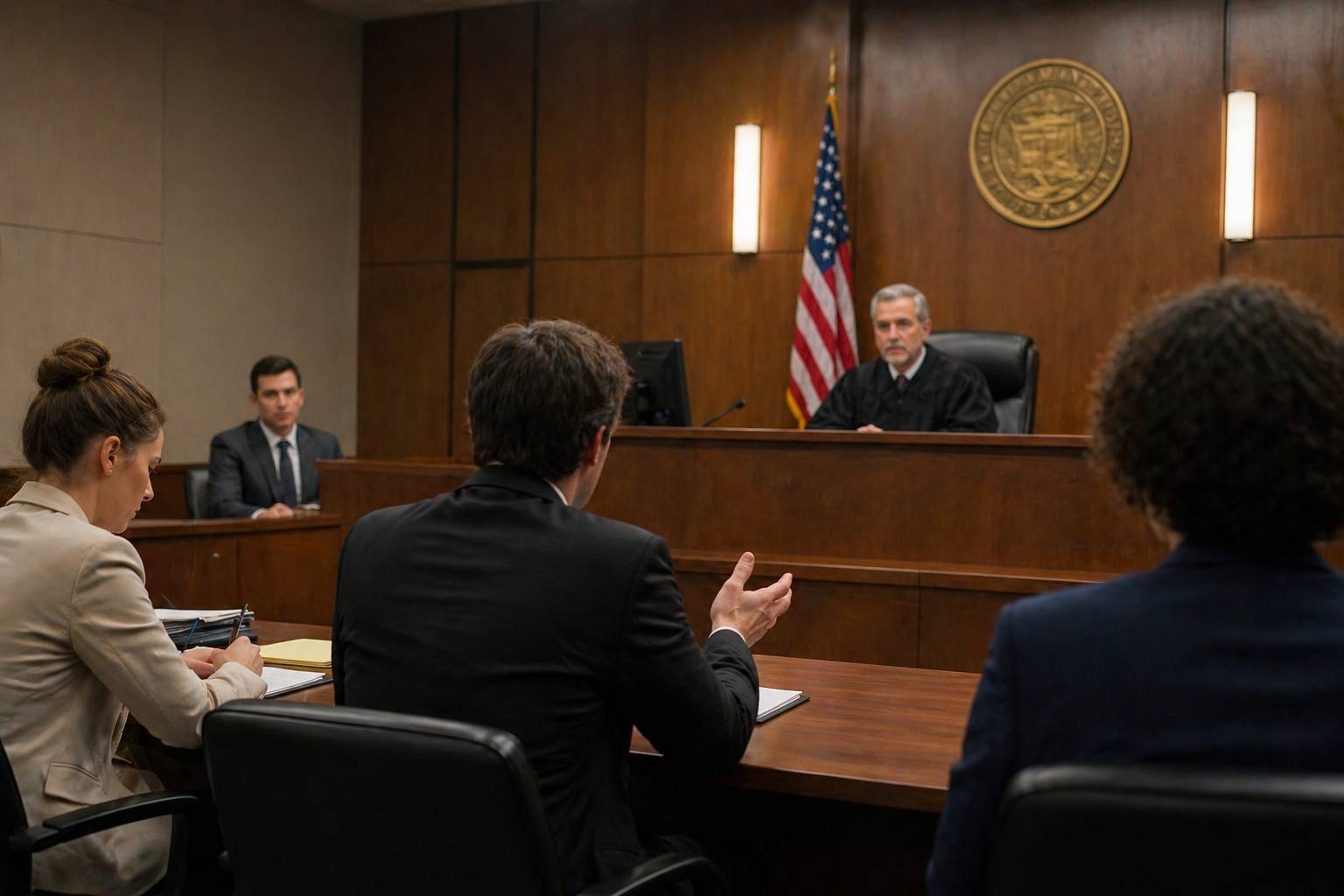
Being arrested and taken into custody is one of the most frightening experiences a person can face. In the hours following your arrest, you have one critical opportunity to secure your release before trial: the bond hearing. Whether you are released on bond or held in jail until your case is resolved can determine whether you keep your job, maintain your housing, and stay connected to your family — or whether you lose everything while fighting your case from behind bars.
At Bixon Law, Atlanta bond hearing lawyer Michael Bixon understands that time is of the essence when you or someone you love is in custody. With 15 years of criminal defense experience in Georgia courts, Michael has successfully argued for the release of clients facing charges ranging from DUI and drug offenses to Armed Robbery and Aggravated Assault. He knows what judges look for at bond hearings and how to present the strongest possible case for your release.
Michael Bixon is available 24 hours a day, 7 days a week to provide immediate assistance when you are arrested. The sooner he is involved, the better your chances of being released on favorable terms. Do not wait — contact Bixon Law immediately if you or someone you love is in custody and needs representation at a bond hearing.

A bond hearing (also called a bail hearing or first appearance) is a court proceeding that typically occurs within 48 to 72 hours after an arrest. At this hearing, a magistrate or judge:
The bond hearing is your first opportunity to be heard by a judge after an arrest, and it is one of the most important hearings in your case. If the judge denies bond or sets an amount that you cannot afford, you may remain in custody for weeks or even months while your case proceeds through the court system.
Georgia law recognizes several different types of bonds, each with different requirements and conditions.
An own recognizance bond allows you to be released without posting any money. You simply sign a written promise to appear in court at all required hearings. O.R. bonds are typically granted in cases involving:
Advantage: No money required for release.
Disadvantage: If you fail to appear, the court can issue a bench warrant and impose additional penalties.
A signature bond is similar to an O.R. bond, but if you fail to appear in court, you will owe the full bond amount to the court. These bonds are common for low-level offenses where the defendant poses minimal flight risk.
A cash bond requires you (or someone on your behalf) to pay the full bond amount in cash to the jail or court. If you appear at all required hearings, the cash is returned at the conclusion of your case, minus any court fees or fines.
Example: If the judge sets a $5,000 cash bond, you must pay $5,000 to be released. When your case is resolved, the $5,000 is refunded (minus fees).
Advantage: You get your money back if you comply with all court requirements.
Disadvantage: Most people cannot afford to pay thousands of dollars up front.
A surety bond involves hiring a bail bondsman who posts the bond on your behalf in exchange for a non-refundable fee (typically 10% to 15% of the bond amount). The bondsman guarantees to the court that you will appear at all required hearings. If you fail to appear, the bondsman is responsible for paying the full bond amount to the court.
Example: If the judge sets a $10,000 bond, you pay a bondsman $1,000 to $1,500 (10-15%), and the bondsman posts the full $10,000 bond. You do not get the fee back, even if your case is dismissed.
Advantage: You only need to pay a fraction of the bond amount.
Disadvantage: The fee is non-refundable, and the bondsman may require collateral (such as property or a vehicle).
A property bond uses real estate as collateral to secure your release. The property must have sufficient equity to cover the bond amount, and a lien is placed on the property until the case is resolved.
Advantage: No cash payment required upfront.
Disadvantage: If you fail to appear, the court can foreclose on the property. Property bonds also take longer to process because the court must verify ownership and equity.
Under Georgia law (O.C.G.A. § 17-6-1), the court must consider several factors when deciding whether to grant bond and how much bond to require:
More serious charges (such as violent felonies, drug trafficking, or weapons offenses) typically result in higher bonds or denial of bond altogether. For example:
If you have prior convictions, especially for similar offenses, the court is more likely to set a higher bond or deny bond. A clean record, on the other hand, increases your chances of being released on a low bond or O.R.
The court assesses whether you are likely to flee and not return for your court date. Factors that reduce flight risk include:
If the court believes you pose a danger to the community, it may deny bond or set a very high bond. This is particularly true in cases involving:
If you have a history of failing to appear in court or of violating probation, the court is less likely to grant bond or may require a higher bond amount.
Certain offenses in Georgia are non-bondable, meaning the defendant is not entitled to bond and must remain in custody until trial. Under O.C.G.A. § 17-6-1(e), a bond may be denied when:
Even in non-bondable cases, Michael Bixon can file a motion for a bond hearing and present evidence to persuade the court that you should be released pending trial.
Michael Bixon has successfully argued for the release of clients facing serious charges by presenting compelling evidence and persuasive arguments at bond hearings. Here is how he approaches every bond hearing:
The sooner Michael is involved, the better. He can often arrange for you to be released within 24 to 48 hours of your arrest by:
Judges want to see that you have strong reasons to return to court. Michael presents evidence such as:
In some cases, the state’s evidence is weak or the charges are based on a misunderstanding. Michael can present evidence at the bond hearing that undermines the state’s case and demonstrates that you pose no flight risk or danger to the community.
If you are released on bond, you must comply with all conditions of your release. Common bond conditions include:
– Submitting to drug testing (if required)
If you are accused of violating your bond conditions, contact Michael Bixon immediately. He can represent you at a bond revocation hearing and argue for the bond to be reinstated.
Contact us now for a free consultation

If you or someone you love is in custody and needs representation at a bond hearing, contact Bixon Law immediately. Michael Bixon is available 24 hours a day, 7 days a week to provide immediate assistance. The sooner he is involved, the better your chances of being released.
Disclaimer: This content is for informational purposes only and does not constitute legal advice. The outcome of any case depends on its specific facts and circumstances. Past results do not guarantee future outcomes. Contact Bixon Law for advice about your individual situation.