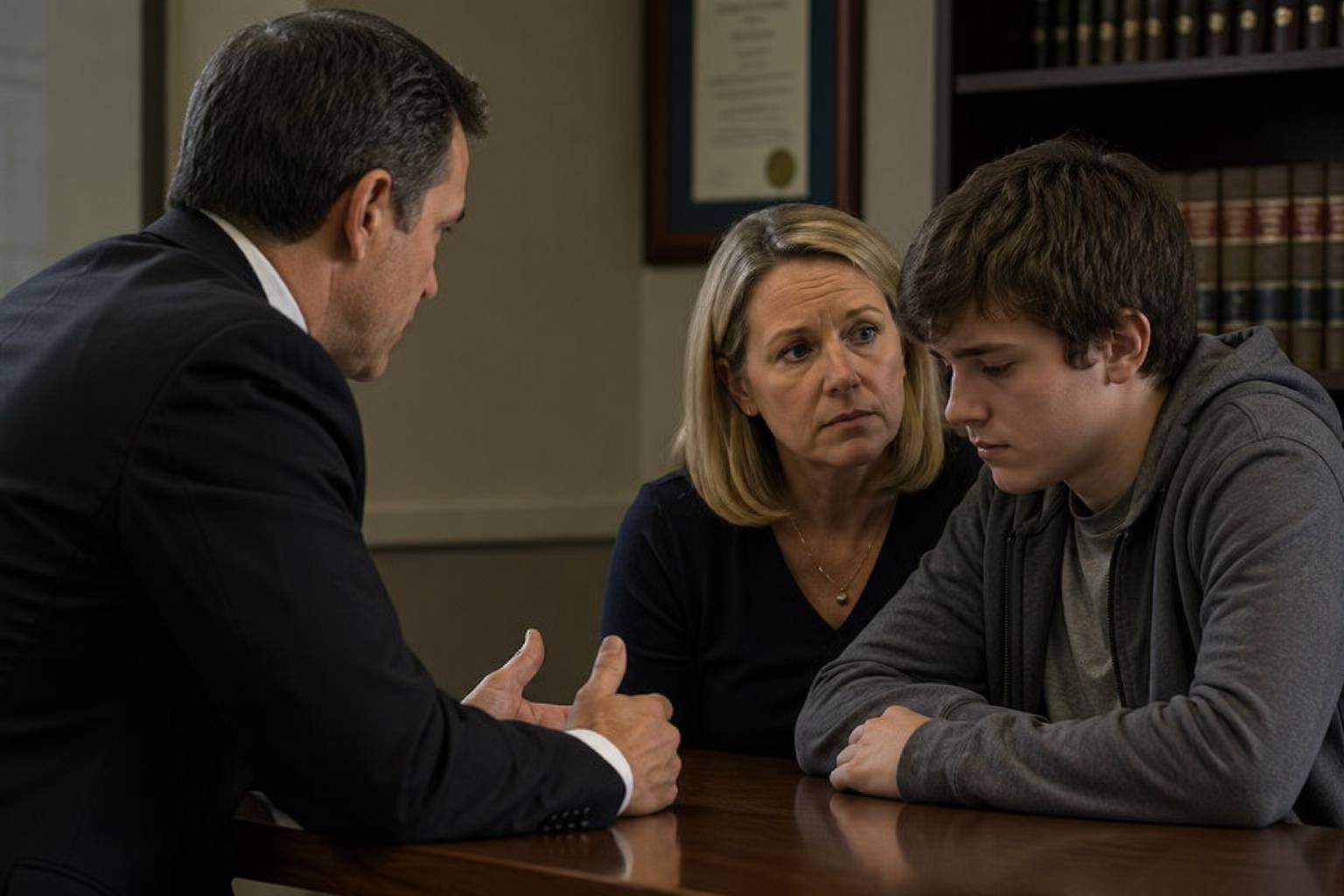
When your child is facing juvenile criminal charges in Atlanta, every decision you make in the coming hours and days can determine the trajectory of their entire life. A juvenile record can affect college admissions, scholarship eligibility, employment opportunities, military service, and professional licensing. In some cases, a young person can even be prosecuted as an adult, facing the same penalties as fully grown offenders.
At Bixon Law, Atlanta juvenile crimes defense lawyer Michael Bixon understands the unique challenges and stakes involved in juvenile cases. With 15 years of criminal defense experience in Georgia courts, Michael has successfully defended young people facing charges ranging from shoplifting and underage drinking to serious felonies like aggravated assault and drug trafficking. He knows that juveniles are not simply “small adults” — they are still developing, capable of rehabilitation, and deserve a second chance.
Michael Bixon approaches every juvenile case with two goals: protecting your child’s constitutional rights and preserving their future. He is a graduate of the Bill Daniel Trial Advocacy Program and has been recognized as one of the National Trial Lawyers Top 100. He is available 24 hours a day, 7 days a week to provide immediate guidance when your child is arrested, detained, or under investigation.
If your child is facing juvenile charges in Atlanta or the surrounding counties, do not wait. Contact Bixon Law immediately to begin building a defense strategy that protects your child’s rights and their future.

Georgia’s juvenile justice system is designed to be rehabilitative rather than punitive. The philosophy is that young people are capable of change and that the focus should be on addressing the underlying causes of delinquent behavior rather than simply punishing them. However, the reality is that juvenile court can still result in serious consequences, including detention, placement in a youth development campus, and even transfer to adult court.
In Georgia, a juvenile is defined as a person under the age of 17 at the time the alleged offense was committed. This means that if your child commits an offense on their 16th birthday, they are still subject to juvenile court jurisdiction. However, once a child turns 17, they are treated as an adult for criminal law purposes.
Important exceptions:
– Designated felonies: Certain serious offenses committed by juveniles age 13 and older are automatically filed in superior (adult) court, rather than juvenile court. We discuss these offenses in detail below.
– Transfer to adult court: In some cases, a juvenile can be transferred from juvenile court to adult court through a process called a “transfer hearing” or “waiver hearing.”
Michael Bixon has defended young people facing a wide range of charges in Georgia’s juvenile courts. Here are some of the most common offenses:
Shoplifting (O.C.G.A. § 16-8-14) is one of the most common juvenile offenses. It occurs when a minor takes merchandise from a store without paying. Even a first-time shoplifting offense can result in a juvenile record, restitution to the store, community service, and probation.
Defenses:
Possession of marijuana, prescription drugs without a prescription, or other controlled substances is a common juvenile charge. Georgia law treats drug possession seriously, even for minors.
Consequences:
Defenses:
Georgia law prohibits anyone under 21 from possessing or consuming alcohol. Underage drinking is typically a misdemeanor, but it can still result in a juvenile record, fines, community service, and a driver’s license suspension.
Common scenarios:
Defenses:
Assault and battery charges often arise from fights at school, altercations at parties, or disputes between juveniles. Even a minor scuffle can result in serious charges if injuries occur or if weapons are involved.
Defenses:
Vandalism charges typically involve graffiti, destruction of school property, or damage to vehicles. These cases often require restitution to the victim and can result in probation or community service.
Some juveniles are charged with serious felonies, including:
These cases can result in long-term placement in a youth development campus or transfer to adult court, where the child faces adult penalties, including prison.
Georgia law divides juvenile cases into two categories: unruly children and delinquent children.
An unruly child is a child who:
Unruly cases are generally less serious and focus on family intervention, counseling, and supervision rather than detention. The goal is to address the root causes of the child’s behavior and to provide support to the family.
A delinquent child is a child who:
Delinquent cases are more serious and can result in detention, placement in a youth development campus (YDC), probation, restitution, community service, and other consequences. The specific disposition depends on the severity of the offense, the child’s prior history, and the needs of the child and the community.
Georgia law designates certain serious offenses as designated felonies under O.C.G.A. § 15-11-63. If a child who is 13 years old or older is charged with a designated felony, the case is automatically filed in superior (adult) court, not juvenile court.
The following offenses are designated felonies in Georgia:
If your child is charged with one of these offenses and is 13 or older, they will be prosecuted in adult court unless their attorney files a motion to transfer the case back to juvenile court.
After a designated felony case is filed in the superior court, the defense attorney can file a motion asking the court to transfer the case back to juvenile court. The judge will hold a transfer hearing and consider factors such as:
If the motion is granted, the case is transferred back to juvenile court, where the child is subject to juvenile dispositions (such as placement in a youth development campus) rather than adult penalties (such as prison).
Michael Bixon has successfully argued for transfer back to juvenile court in serious felony cases by presenting compelling evidence of the child’s potential for rehabilitation, their family support, and the availability of juvenile services that can address the underlying issues.
The child is placed on probation and must comply with conditions such as:
The child must pay restitution to the victim for damages or losses.
The child must complete a specified number of hours of community service.
For serious offenses or repeat offenders, the child may be placed in a secure facility operated by the Georgia Department of Juvenile Justice. Placements can range from a few months to several years, depending on the offense and the child’s behavior.
In some cases, the court may order restrictive custody in a non-secure facility, group home, or foster care.
The court may order the child to participate in counseling, anger management, substance abuse treatment, or other programs.
The court may suspend a commitment to a YDC on the condition that the child complies with probation terms. If the child violates probation, the commitment can be imposed.
Even if a case starts in juvenile court, the prosecution can ask the court to transfer the case to adult court through a transfer hearing (also called a “waiver hearing”). This typically occurs when:
– The child is charged with a serious felony
– The child has a significant prior juvenile record
– The prosecutor believes the child is not amenable to rehabilitation in the juvenile system
At a transfer hearing, the judge considers the following factors:
Michael Bixon fights aggressively to keep cases in juvenile court by presenting evidence of the child’s potential for rehabilitation, their family support, and the availability of treatment and services in the juvenile system.
If a child is found to have committed a delinquent act, the juvenile court judge imposes a disposition (the juvenile equivalent of a sentence). The goal of the disposition is to address the child’s behavior and to provide services that will help them succeed in the future.
Contact us now for a free consultation
One of the most important considerations in juvenile cases is the long-term impact of a juvenile record. In Georgia, juvenile records can be restricted or expunged under certain circumstances, which means they will not be visible to the public, employers, or schools.
Under Georgia law, most juvenile records are automatically restricted once the person turns 18 or one year after the case is closed, whichever is later. This means that the records are not available to the public and cannot be accessed by employers, schools, or landlords conducting background checks.
Exceptions: Records are NOT automatically restricted if the juvenile was adjudicated delinquent for:
– Designated felonies (murder, rape, armed robbery, etc.)
– Serious violent felonies
– Sex offenses
In some cases, a juvenile can petition the court to expunge (completely erase) their juvenile record. Expungement is only available if:
– The case was dismissed
– The juvenile was found not guilty
– The juvenile completed a diversion program
If the court grants the petition, all records related to the case are destroyed, and the juvenile can legally deny that the arrest or adjudication ever occurred.
Michael Bixon can help you petition for the restriction or expungement of your child’s juvenile record to ensure that one mistake does not follow them for the rest of their life.
In addition to the legal consequences, a juvenile arrest can result in serious school disciplinary consequences, including:
– Suspension or expulsion from school
– Loss of extracurricular privileges (sports, clubs, honor societies)
– Ineligibility for scholarships or financial aid
– Removal from advanced placement or honors programs
Georgia schools are required to report certain offenses to law enforcement, and some offenses can result in automatic expulsion under Georgia’s “zero tolerance” policies (such as bringing a weapon to school or committing a violent act on school property).
Michael Bixon works with families to coordinate with school administrators, present mitigating evidence, and advocate for alternative disciplinary measures that allow the child to continue their education.

Michael Bixon has 15 years of experience navigating Georgia’s juvenile courts. He understands the unique procedures, the key players (judges, prosecutors, probation officers), and the services and programs available to juveniles in the Atlanta area.
Michael Bixon believes that young people deserve a second chance. He works tirelessly to secure outcomes that allow juveniles to learn from their mistakes without being branded as criminals for life.
When you hire Bixon Law, you work directly with Michael Bixon. He personally handles every case and is available 24 hours a day, 7 days a week. If your child is arrested or detained, Michael will respond immediately to provide guidance and to begin working on their release.
Michael Bixon is a graduate of the Bill Daniel Trial Advocacy Program and has been named to the National Trial Lawyers Top 100. He is a member of the Georgia Trial Lawyers Association and the Georgia Association of Criminal Defense Lawyers.
If your child is facing juvenile charges in Atlanta, contact Bixon Law immediately. Michael Bixon is available 24 hours a day, 7 days a week to provide immediate guidance and to begin building a defense that protects your child’s future.
Disclaimer: This content is for informational purposes only and does not constitute legal advice. The outcome of any case depends on its specific facts and circumstances. Past results do not guarantee future outcomes. Contact Bixon Law for advice about your individual situation.